
Celebrating Worthlessness
Reimagining Cockaigne in the 21st Century

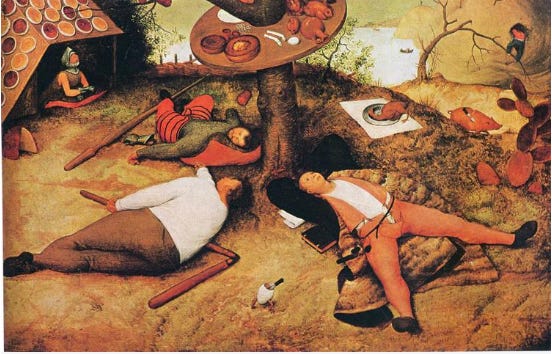
Everyone living at the end of the Middle Ages had heard of Cockaigne at one time or another. It was a country, tucked away in some remote corner of the globe, where ideal living conditions prevailed . . . Work was forbidden, for one thing, and food and drink appeared spontaneously in the form of grilled fish, roast geese, and rivers of wine. One only had to open one’s mouth, and all that delicious food practically jumped inside. One could even reside in meat, fish, game, fowl, or pastry, for another feature of Cockaigne was its edible architecture. The weather was stable and mild—it was always spring—and there was the added bonus of a whole range of amenities: communal possessions, lots of holidays, no arguing or animosity, free sex with ever-willing partners, a fountain of youth, beautiful clothes for everyone, and the possibility of earning money while one slept.
—Herman Pleij, Dreaming of Cockaigne: Medieval Fantasies of a Perfect Life
In some respects, before the 15th and 16th centuries in Europe, right after the Black Plague (1346 - 1353), there was a semblance of Cockaigne across much of the region. With the death of nearly 40% of the population, peasants suddenly had the upper hand when demanding wages from lords, and would engage in what was referred to as “Peasant Wars” if they did not get what they wanted. They were able to negotiate the number of days they worked each week. They also engaged in rent strikes at the end of the 14th century, as feminist Marxist Silvia Federici notes, “Entire villages jointly organized to stop paying fines, taxes, and tallage, and no longer recognized the commuted services, or the injunctions of the manorial courts, which were the main instrument of feudal power.”1 They also had meat, fish, and other foods on their table. This level of leverage lasted through most of the 15th century. As Federici explains, although one must be “skeptical” of descriptions of the cornucopia during that period, “the broad section of western European peasantry, and for urban workers, the 15th century was a period of unprecendented power [my emphasis].” 2 Furthermore, the upheaval and end of land bondage caused by the Black Plague ultimately led to the demise of the feudalistic system, freeing up peasants for a time.
However, by the end of the 15th century, there was a counter-revolution, one of which contributed to the emergence of capitalism. Its development in Europe at that time was uneven, complex, and fraught with resistance. That said, the significant factors in its emergence were the enclosure of the commons, the freeing up of capital, and the turning of peasants into wage-earners. We know, too, that as these changes were occurring in Europe, the European ruling class had, “launched the global offensive that in the course of at least three centuries was to change the history of the planet, laying the foundations of a capitalist world-system, in the relentless attempt to appropriate new sources of wealth, expand its economic basis, and bring new workers under its command.”3 This enterprise—the very emergence of capitalism and its colonial antecedents—was based upon systemic violence, enslavement, piracy, the pillaging and expropriation of land, and mass murder. The suffering this economic system unleashed then has not ended, and continues to this day. We continue to be mired in it, seemingly trapped by its exploitative, murderous clutches, in which it preys on the most vulnerable on the planet who are used at the expense of the accumulation of more capital.
But is that the entire story? Is capitalism gobbling us all up and spitting us all out? In many ways, yes, it’s doing that. However, to assume there is no resistance now is just as much a fallacy as thinking that peasants in the late Medieval period weren’t fighting for their own rights and agency. The struggle existed then, and it exists now. The examples of resistance back then and today are limitless, too. In addition, the images of an idyllic Cockaigne weren’t based upon pure fantasy; they were based upon the collective memory of what had been and what could be. I, too, propose we reimagine a Cockaigne for ourselves.
Right now, we’re facing off with billionaire techbros (and they are the ones mainly calling the shots in this tech-driven form of capitalism) who want to render us useless as laborers by replacing us with AI bots.
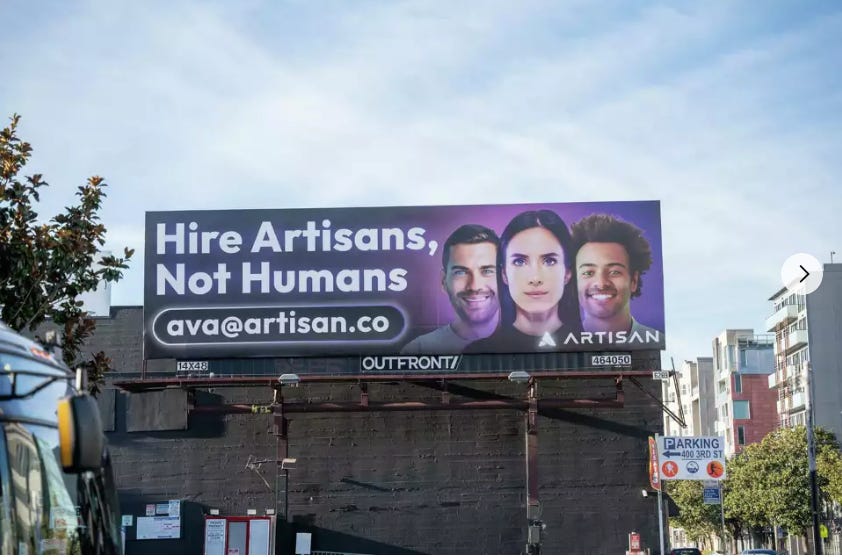
If the billionaire techbros have their way, which people predict they will, a large swath of us will be rendered “worthless.” But is that such a bad thing?
This piece was inspired, in large part, by Douglas Rushkoff, who recently wrote an essay titled “The Joy of Becoming Worthless.” (Rushkoff’s piece should be read in its entirety, as I’m not touching on all the great concepts he wrote about.) Reading his piece was absolutely thrilling and reminded me of a lot of the work I’ve written about here recently, most notably my interview with Kristin Ross about her book The Commune Form: The Transformation of Everyday Life (2024). The commune is a place of reimagining, creativity, and liberation—it is an actual space and locale where things occur outside the capitalist framework. They are models for us to consider, as the billionaire techbros have a pretty nefarious-sounding plan to eliminate most of us from the workforce with AI bots anyway. In the U.S., the White House is doing the techbros’ bidding as a kleptocracy has now firmly entrenched itself here and continues to strengthen its relations with kleptocrats abroad (think of nasty actors like Viktor Orbán in Hungary and Vladimir Putin in Russia). To be clear, all these kleptocrats have different aims and objectives. However, they’re still part of a global kleptocracy, which relies upon a pyramid scheme that people understand to be capitalism, one that is, arguably, quite shaky. And the billionaire techbros have even worse plans up their sleeves, as I’ve already mentioned that they are coming for our jobs, like almost all of them. Rushkoff writes:
AI is coming for our jobs. Not the super-creative ones, or the high-touch human ones, but the ones that maintain administrative control over everything. The majority of jobs. All the people in the mortgage departments, the insurance companies, the spreadsheet people, the Powerpoint people. Doomers say it’s 90% of jobs, but let’s even say it’s just half of office jobs taken by AIs and blue collar jobs taken by robots.
It sounds pretty shitty. But while it does sound awfully shitty, as Rushkoff suggests, it actually might not be bad for us. For starters, if they render the vast majority of us unemployed, who the hell will buy their shitty products? Good question. Well! They thought about that already, at least that’s Rushkoff’s theory, and I think it’s a sound one. The fantasy plan is for AI to buy from other AIs.
And this is the weird part: in their vision, it won’t be by selling products to people, but selling things to the AIs themselves. It’s a tricky idea, but once you wrap your head around it, it all makes perverse sense. In today’s economy, a small number of wealthy people and corporations employ us and sell to us. They don’t really need to care what species we are, or whether we are human or android, as long as we are producing value for their companies and then purchasing products from them.
And Rushkoff is absolutely correct in also saying that corporations do not give one shit if they are employing AIs or humans, or if they are selling to humans or AIs, as long as they are accumulating wealth, why does it matter to them?
Exploitation is the name of the game, whether it’s the human working class or the robotic working class. Rushkoff continues:
AI, at least theoretically, in the minds of crazy tech billionaires who believe AGI (human-level AI) is genuinely around the corner, allows them to move on from employment, exploitation, and colonialism of people, and simply level up. We, humans, are discarded as capitalism moves up into a layer of total abstraction. It becomes the video game it was destined to become, with the humans represented by digital icons or NFTs instead of flesh and blood mammals.
Obviously, as Rushkoff points out, the billionaire techbros, their shareholders, and others who are part of the kleptocracy will continue to isolate themselves, live in absolute luxury, and leave the rest of us behind to fend for ourselves, as they continue on this path, one that is also highly destructive to the planet. That’s a scary thought, I know. But here’s where Rushkoff gets interesting and really inspiring. Does it have to be that scary? After all, what’s our greatest resource, something that those in the kleptocracy, I argue, sorely lack? We have community. We have each other. We can push back. But more than that, we have he opportunity to build something for ourselves. We can create our own Cockaigne, one based on material realities, one that people in Europe enjoyed to some degree before the late 15th and early 16th centuries, when capitalism emerged.
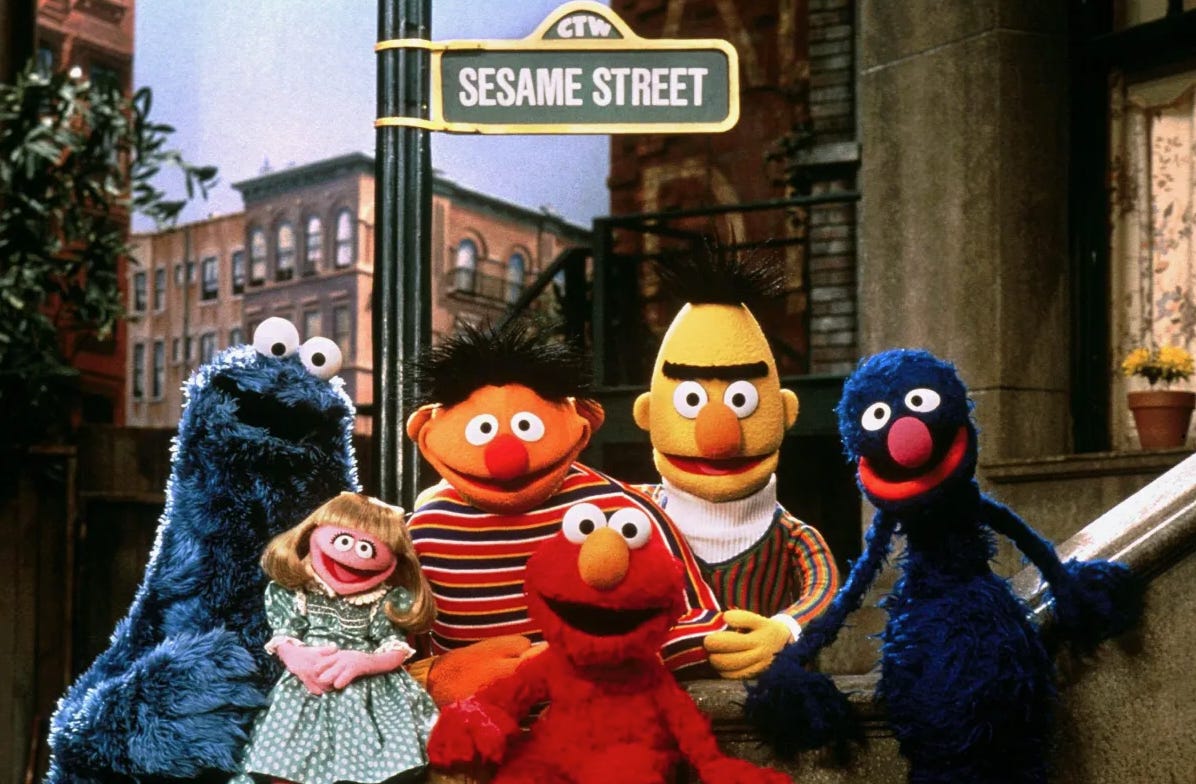
As Rushkoff notes, this type of building and the creation of our own communities won’t be easy. It will be hard work. For one, as he notes, we need to relearn empathy, along with, as I argue, cooperation. Kindness is another critical attribute that dovetails nicely with empathy and needs to be reinvoked. Trust will be another significant component. We’re all going to have to begin to trust one another again. In short, all of those lovely things you were basically taught on Sesame Street (I’m giving away my age here) need to be honed again and reignited.
It’s up to us to decide what sort of future we want, and we don’t need to leave it to the billionaire techbros to determine that for us. And if they’re going to push the majority of us out of the labor market, we’re going to have a lot more time on our hands to imagine the type of future we deserve to have and then build it. I’m sure you’ll agree, but I don’t want to be stuck in some cheesy-ass dystopian hellscape that so many of these billionaire techbros, nihilists, and misanthropes like to cast as our near future. It doesn’t have to be that way. A modern-day Cockaigne could be ours if we collectively decide to seize the means to create it. And that would mean reveling in our worthlessness to capitalism—what an achievement that would be! But then we’d get to work.
Silvia Federici, Caliban and the Witch: Women, The Body, and Primitive Accumulation (Brooklyn, NY: Autonomedia), 45.
Ibid., 46.
Ibid., 62.
One comodity we "Phesants" have is live entertainment. Human performance of arts, music Etc. Such things are made of soul not wealth. Analog beauty is our irrevocable wealth.
Another asset is the trend towardsand the need for Point of Use ,(POU), power generation, water harvest/reuse, along with the move away from a Macro controlled utility system. Rooftop solar power, Rooftop Rainwater Harvesting, Etc. is emerging.
I saw that Artisans Ad on the London tube waiting for a train, and I thought it was absolutely wild. It felt like we were being trolled by an AI company as we went to work. God knows what you’d think looking at that on your way to try and find a job if you were out of work. “Oh good, I’m apparently literally redundant”.
AI has the potentially to be liberating, but if it’s entirely controlled by corporations it has the potentially to be incredibly exploitative and a danger to humanity. Like anything else corporations had control of without oversight.
I thought the article was well written and liked you drawing on that medieval notion of a land of plenty and how workers have always been exploited in one way or another. And perhaps a way out through collectivist / grass roots action?
Thanks for sharing.