
Part I: Dagmar Herzog's The Question of Unworthy Life: Eugenics And Germany's Twentieth Century

In The Question of Unworthy Life: Eugenics and Germany’s Twentieth Century, historian Dagmar Herzog sets out on an ambitious project: to trace an intellectual history of the undulations of a thought — that of “life unworthy of life” (lebensunwerten Lebens) — throughout the twentieth century in Germany as it relates to those with disabilities. Far from being a static concept amongst the public, scientists, politicians, doctors, caregivers, and theologians (both Protestant and Catholic), Herzog illustrates how perceptions of the disabled ebbed and flowed, while also focusing on how this dangerous notion of lebensunwerten Leben gained traction and was implemented during the twelve years of Nazi rule. She also explores the post-war years and how decades of fighting by disability rights activists finally enabled them to make inroads in German society today, yet the struggle continues.
First and foremost, she puts the victims, the disabled, front and center in the introductory paragraphs, noting that one does not hear a trace of their voices in the archives or documents; it’s all through secondhand accounts, as someone is always speaking for them. As she also remarks, the so-called Nazi euthanasia program, which was a term that masked the mass murder of the disabled, killed close to 300,000 individuals who the Nazis deemed to have “psychiatric illness or cognitive behavioral deficiencies.” Once the Nazis occupied Poland and parts of what was the former Soviet Union, they murdered another 80,000. These killings were carried out by mass shootings, planned starvation, medication overdoses, poisoning of various methods, and also the usage of six carbon-monoxide infused gas chambers in what was called T4.1 (Aktion T4, which was also referred to as Aktion Gnadentod — in English that means “Action Merciful Death” — was in reference to Tiergartenstrasse 4 in Berlin, where the plan had been devised.)2 On top of those death tolls, they also forcefully sterilized another 400,000 individuals.
But the story of the disabled, those who were either physically or cognitively impaired, was not always about ridding them from society, as Herzog shows. A sidestepping back into the mid-nineteenth century reveals a different approach to individuals who were perceived and treated as impaired. In order to carry out this investigation, however, Herzog analyzes three complex intersections of history: that of pedagogy, religion, and medicine. Here is where we are introduced to Dr. Johann Jakob Guggenbühl (1816 - 1863). A Swiss doctor, Dr. Guggenbühl, founded a school not far from Interlaken for children with cognitive impairments. The foundation of his approach was love, along with good nutrition, exposure to fresh mountain air, and “innovative pedagogy.” He soon became an international hit and was “made an honorary member of scientific societies from Marseille to St. Petersburg.”3
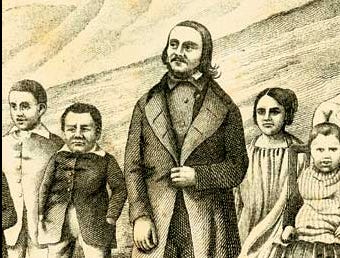
As Herzog notes, his work was motivated by treating the disabled with “dignity” and “equality,” which was predicated on providing them with deep care and affection. She continues, “‘The first requirement’ was ‘to treat the children with love and thereby win their love.’”4 This was a “human rights framework.” Guggenbühl saw every child as “precious” in the eyes of God and was “deeply motivated by religion” with the care and education he carried out. Unfortunately, by the 1850s, accusations of being a grifter and fraud began to surface. While he was away traveling, it appeared that the staff had neglected the children. In addition, others found his claims that disabled children had a special relationship to God absurd. By 1858, Swiss authorities had shut down his institution, and a few years later, he died with a rather bad public reputation.5 Of course, Dagmar points out, he was not the only one to experiment with these ideas of showering the disabled with love and affection, offering them pedagogical models of learning, and small residential schools as a haven. There were several others, such as the physicians Adolf Erlenmeyer and Carl Heinrich Rösch, and teachers such as Carl W. Saegert and Ferdinand Kern. It should be noted, just as Guggenbühl concluded, that all of these practitioners made it clear that “curing idiocy” was not possible. However, the backlash against Guggenbühl was formidable, and the common thread against him was that he had claimed it was curable, meaning by the 1880s through the 1890s, the model to contend with intellectual disability ran counter to all that he had sought, recommended, and implemented, despite its worthiness even for today’s standards.
Furthermore, Herzog discovered in the literature that everyone involved in “disability teaching, or training, for decades, appeared to need to accuse others of having once claimed that they could provide a cure,”6 thus, Guggenbühl was no exception to this rule.
A new fixation also replaced Guggenbühl’s model, and that was whether or not someone with an intellectual disability was “useful” (nützlich, brauchbar, tauglich) rather than a “burden to society.” Herzog notes this notion of usefulness (Nützlichkeit) spread at the same time as remedial schools and institutions grew. Simultaneously, the process of creating a hierarchy among the intellectually disabled was refined. By 1889, there were three categories: those at the top were “feeble-minded (schwachsinning), and considered the least disabled; those in the middle group were deemed “trainable” (erziehungsfsähig), and could be assigned some work tasks; those at the bottom who could not care for themselves at all were termed “care-cases” (Pflegefälle). Herzog adds, however, “to add to the general confusion, the word ‘idiot’ was for a long time used as an umbrella term to encompass all of those deemed cognitively limited.”7
By this time period, anxiety around care and cost for the disabled was already at a fever pitch. Hence, the preoccupation with which groups, as they were hierarchized, could work and which ones could not. (There were also claims that work could be “therapeutic,” but it was just a way to exploit the person’s labor.)
In addition, the emergence of industrialization and the rapid growth of urban centers gave rise to the expansion and development of remedial schools and institutions for those with intellectual disabilities. Herzog also notes that “observers were [also] starting to conceive of the masses of the needy as a grave menace to the body politic.”8 There was also a shift in how these types of illnesses were defined, thus “subset[s of] mental illnesses” were created, two of which were “difficult-to-manage” (schwer erziehbare) and “neglected” (verwahrloste) youth. Issues relating to poverty, labor exploitation, and other structural paradigms tied to capitalism were not identified as key factors that led to behavioral problems. Instead, the professional class of psychiatrists that the Prussian state funded were eager to label it as new “novel coinages” such as ‘psychopathic inferiority’ (psychopathische Minderwertigkeit) and ‘moral feeble-mindedness’ (moralischer Schwachsinn). This language also overlapped with the lexicon that teachers, pastors, and priests began to use. However, the latter two groups were losing influence as the state was providing more resources to the newly rising class of psychiatrists and state-funded institutions, which were expanding across Prussia.
The 1890s also saw the rise of language around specific forms of “breeding” people and killing. While speaking of the disabled in violent, negative, and gruesome ways was nothing new in the lexicon of European thinkers (Martin Luther said that disabled children were “possessed by the devil;” Enlightenment thought placed the cognitively impaired at a lower level intellecutally than animals),9 Herzog notes that “by the last decades of the nineteenth century, freshly conceptual frameworks that justified killing individuals with cognitive impairments would become advanced far more openly and frequently. Expressing ‘murder-thoughts’ was becoming socially acceptable [my emphasis].”10
Then the war that was to end all wars came—World War I. Shortly thereafter, a book that was to influence Germany for years to come was published in 1920. Titled Permission to Annihilate Life Unworthy of Life (Die Freigabe der Vernichtung lebensunwerten Leben), it was a trim book written by Karl Binding (1841-1920) and Alfred Hoche (1865 – 16 May 1943). Herzog writes, “the book has often been invoked when scholars or journalists explain the prehistory of the Nazi ‘euthanasia’ murder program,”11 something that is, undoubtedly, true.
Although Herzog documents the enormous influence this book had on the thinking about eradicating the disabled, she also notes that:
far less well studied are the various counter-positions proposed by Christian authors—theologians, pastors, and charity institution directors, most of them active in the Inner Mission, the umbrella organizaton of all the Protestant church welfare work—who, during the Weimar Republic, strove to argue that Binding and Hoche were simply wrong, and that the killing of those Binding and Hoche had demeaningly labeled as ‘life unworthy of life'‘ should be considered morally unacceptable.

The problem was that the Christian lacked the language to counter the arguments in favor of killing the disabled. In addition, by the time Hitler took the position of Chancellor in January 1933, the “confidence in that life-sustaining perspective [for disabled individuals] had been seriously eroded.”12 The language of the Third Reich, as Victor Klemperer has shown us all too well, was going to come soon to grip the nation.
In the second part of my forthcoming essay, we will explore the complications around how Christians attempted to argue against Binding’s and Hoche’s (flawed and eugenicist) logic, their “ambivalence about disability as a phenomenon,” disputes about whether or not disabled people were human beings, and finally, about the “practice of care.”13 This exploration will entail digging into the dark period of Nazi Germany and coming out on the other side to see what care became like in the post-war era. Finally, an examination of the fallout of crimes against humanity of the disabled, which wasn’t considered as such for decades, will also be considered.
Stay tuned.
Dagmar Herzog, The Question of Unworthy Life: Eugenics and Germany’s Twentieth Century (Princeton, NJ: Princeton University Press, 2025), 1.
Dagmar Herzog, Unlearning Eugenics: Sexuality, Reproduction, and Disability in Post-Nazi Europe (Madison, Wisconsin: University of Wisconsin, 2018), 44.
Dagmar Herzog, The Question of Unworthy Life: Eugenics and Germany’s Twentieth Century (Princeton, NJ: Princeton University Press, 2025), 21.
Ibid., 21.
Ibid., 22.
Ibid., 23.
Ibid., 28.
Ibid., 35.
Ibid., 38.
Ibid., 39.
Ibid., 46.
Ibid., 47.
Ibid., 47.
Thank you for putting the victims front and centre. It was interesting how you traced the shifts from Guggenbühl’s ethos of dignity and love, through the later obsession with “usefulness,” to the horrifying acceptance of “murder-thoughts.” It shows how fragile ideas of human worth can be, and how quickly compassion can be eroded or forgotten / normalised. I’m looking forward to the second part, especially your exploration of how Christian thinkers tried (and often failed) to find the language to resist Binding and Hoche’s arguments. As the church often gets run over for their lack of opposition to Nazi atrocities.
Permission to Annihilate?? Holy poop!