
Close Analysis of "Counterplanning from the Kitchen"
Wageless Women at Home Need to Demand a Wage


[This series of essays examines pieces from Patriarchy of the Wage: Notes on Marx, Gender, and Feminism by Marxist-Feminist Silvia Federici.]
Setting the Scene: Wageless Women and the Problem of Carol Lapote
Silvia Federici is a Marxist-Feminist, Italian-American (1942- ), and a Professor Emerita at Hofstra University, where she taught political philosophy and international studies.
In 1974, Federici wrote a polemical essay titled “Counterplanning from the Kitchen,”1 which counters an article written by Carol Lapote called “Women and Pay for Housework.” In her piece, Federici argues that women at home, who are wageless, should receive a wage. The fact that they are wageless has contributed to a division of labor created deliberately by the capitalist system.
Lapote wrote her article in response to the women’s movement’s Wages for Housework proposal and took special aim at Mariarosa Costa’s and Selma James’ English version pamphlet titled "Women and the Subversion of the Community" in 1973. This was part of a women’s movement initiative in Italy that had spread to the U.S. in the early 1970s, and Lapote was critiquing it. The issue centered around the “woman question,” something that Federici also asserted was a problem for the left, and was not just an issue regarding Lapote’s response. Federici opens her essay, “Counterplanning from the Kitchen,” with a quote from Dalla Costa and James. It reads as follows:
Since Marx it has been clear that capital rules and develops through the wage. What has not been clear nor assumed by organizations of the working classs is that the exploitation of unwaged workers has also been organized through the wage. This exploitation has been even more effective because it has been hidden by the lack of a wage. Where women are concerned, our work appears to be a personal service outside of capital.2
As Federici notes, when it comes to “class struggle” and the “unified interest of class,” the left has determined that only select groups of the working class count as “the revolutionary subject.” In contrast, they “condemn others to a mere support[ing] role in the struggles these sectors are waging.”3 Thus, the left is also responsible for creating division amongst the working classes (and that critique doesn’t just relate to women, she also mentions other groups—Black workers, “Third World” workers, among others—who have been sidelined).
When it comes to the wageless work that women perform for capital in the home, it has thus “escaped their analysis and strategy.” Federici explains that the consequence is twofold in that the presumption is that the kitchen and the bedroom lie outside the parameters of capital. One, there is the assumption that the work is at a precapitalist stage, and thus “whatever we do in our kitchens and bedrooms is irrelevant to social change.”4 Therefore, if housework lies outside of capital, the struggle of their work will never be the “cause for capital to fall.” (And isn’t it kind of capitalist society to “allow” for a vast swath of individuals to remain outside the system? To draw such a conclusion is illogical, as the system exploits all individuals.)
But let’s assume, as the left does, that women are outside of capital. If women at home are outside of capital, then what is the solution for the left? Their answer, just like it is for the “Third World,” is to bring them into the proverbial factories or workplaces. But it’s a false presupposition, Federici contends, as “it presumes that the ‘underdeveloped’—i.e., those who are wageless and work at a lower level of technological development are backward with respect to the ‘real working class,’ and we can only catch up by gaining access to a more advanced form of capitalist exploitation, a bigger share of factory work.”5 However, entering the workforce in this manner is not the solution.
Federici asserts that this analysis is a grave mistake. All it’s calling for is a “right to work,” which ultimately leads to further exploitation of individuals within the capitalist system.
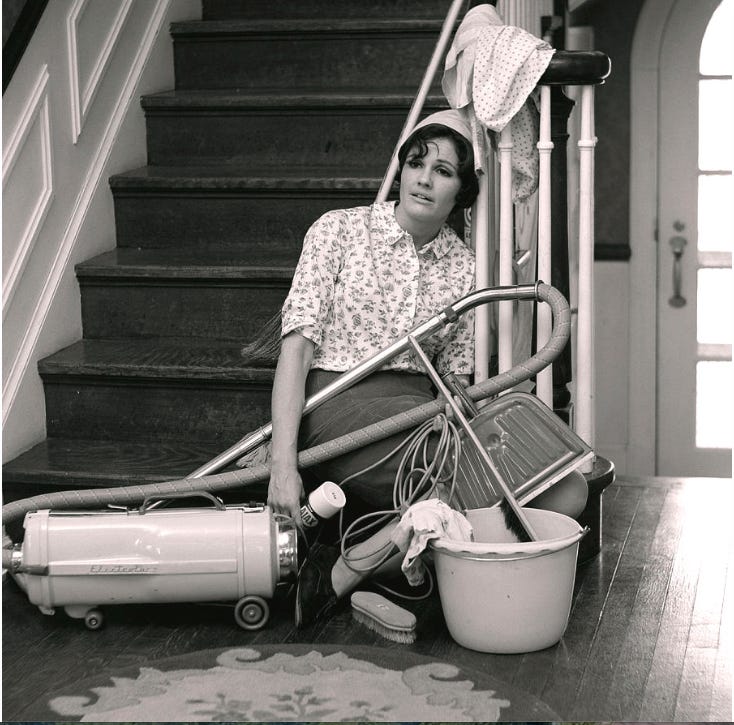
Thus, she contends that the Wages for Housework initiative’s political foundation is the refusal of this capitalist ideology, which, she states, “equates wagelessness and low technological development with political backwardness, lack of power, and assumes that a precondition for our getting organized is that we are first organized by capital.”6 There doesn’t have to be this prerequisite to being organized, i.e., the wageless do not have to have experienced these conditions of exploitation with capital in order to engage in liberatory practices for the working class.
In asserting these ideas, Federici and others who were part of the Wages for Housework sought to redefine wages in relation to the meaning of capital itself. They called for a “new evaluation of class forces and class needs.”
She adds, “Wages for Housework, then, is not one demand among others; it is a political perspective that opens a new ground of struggle, beginning with women but for the entire working class.”7
Federici then pursues her polemical attacks against Lapote’s essay, saying that it is one more example of “reduction, distortion, and avoidance.” She asserts that the “very title ‘Pay for Housework’ misrepresents the issue,” as a wage is not simply about money but about “the power relation between capital and the working class.”
Lopate also attempts to discredit Wages for Housework by claiming it was “imported” from Italy, and thus has no bearing on the U.S., as women in the U.S. are already working. Federici argues that Lopate is simply disseminating more misinformation. Plus, the origins of the movement are of no consequence given capital’s international spread across the globe. What matters is its “political genesis, which is “the refusal to see work and exploitation only in the presence of a wage.”8 In a word, there should be no difference between women “who work” and women who are “just housewives,” as the latter implies that housework does not amount to labor. Furthermore, Lopate also suggests that women in the U.S. are the only ones who work, struggle, and have a second job, which is clearly false.
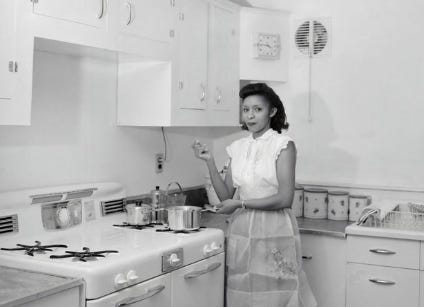
Federici drives this point home by stating that Lapote overlooks and ignores the fact that American capital was built by unwaged labor from enslaved Africans violently brought here, and continued to rely upon the unwaged up to when her essay was written in 1975. (Unwaged labor exists now in 2025. It isn’t just women in homes who still work for no wages, but also the exploitation of unwaged prisoners, especially in the South.)
Women Produce the Most Precious Commodity for the Capitalist Market: Labor Power
Women are the drivers behind the capitalist system. As soon as they hit the ground running in the morning, if they are mothers, they are tying shoelaces for their little children, cooking meals for everyone, mending clothes, and managing everyday life for an entire system—the family unit. They are also producing the most precious commodity for the capitalist market: labor power. As Federici makes clear, “Housework, in fact, is much more than housecleaning. It is servicing the wage-workers physically, emotionally, and sexually, and getting them ready to work day after day for the wage. It is taking care of our children—the future workers—assisting them from birth through their school years and ensuring that they too perform in the ways expected of them in capitalism.”9
In short, women are the “pillars of capitalist production.” Millions of women—wageless women—make offices, factories, and schools function through the discipline they carry out in obscurity at home. And even if they themselves get a waged job, that does not free them from the wageless job they have back at home. Indeed, as Federici states, “Having two jobs has only meant having less time and energy to struggle.”10
Regardless of marriage status, women still must put hours of labor into “reproducing their own labor power, a tyranny of this task, since a pretty dress and a nice hairdo are conditions for getting the job, whether on the marriage market or on the wage labor market.”11 Applied beauty standards for both markets take hours of unpaid labor to obtain either a wageless job or a waged job, both of which serve capital.
There is also the assertion that technology improves work and productivity in the household (or on the job). As Federici states, especially for the wageless women at home, “it is precisely in the US that we can measure the gap between the technology socially available and the technology that trickles into our kitchens.”12 In short, “neither technology nor a second job can liberate women from housework.” The aim, after all, of technology is to produce a “technician” who increases their productivity. And when it comes to being productive, Federici reminds us what Marx said in Capital, “to be a productive laborer is . . . not a piece of luck but a misfortune.”
While Marx had much to say about wage labor, he failed to ever account for housework. But, Federici, unlike Lopate, is not willing to throw out Marx’s analysis, as his critique of capitalist society is “irreplaceable.” That said, Federici suspects that Marx’s disinterest in housework and the plight of wageless women workers in the home was a result of the historical times in which he found himself, along with the chauvinism that came with it. Furthermore, when Marx was writing, men, women, and children were all part of the proletariat; thus, she writes, there was no time for “family life” as such. Federici adds:
It was only after terrible epidemics and overwork decimated the working class and, most importantly, after waves of proletarian struggles through the 1830s and 1840s brought England close to revolution, that the need for a more stable and disciplined workforce led capital to reconstruct the working-class family. Far from being a precapitalist structure, the family, as we know it in the West, is a creation of capital for capital, as an institution that is supposed to guarantee the quantity and quality of labor power and its control.13
In short, the family is the “institutionalization of our wageless labor, of our wageless dependence on men, and, consequently, the institutionalization of a division within the working class that has disciplined men as well.”14 There is nothing natural about the family structure. It was formed to serve capital, and women were left at home to serve as wageless laborers for men who went to the factories (now offices). In other words, men sell their labor to capitalists while women stay home to perform wageless duties that assist the men who sell their wages to the capitalist class.
This deep division of labor between the genders led to deeply ingrained assumptions, which in turn gave rise to necessarily profound questions. Capital tells us that we, as women, are only our SEX. That is our essence. Capital has insisted that we are good at two things: sex and having babies. They insist that these things are eternal. But is that true? As Federici aptly asks, “Who is to say who we are?” (Taking that further, who is to tell us that if our own sex “coincides” with the gender that was assigned to us at birth, that that is something eternal? We’ve learned, from our trans sisters and brothers, that is not the case at all.) She continues:
All we can find out now is who we are not, to the degree that gain the power to break our impose identity. It is the ruling class, or those who aspire to rule, who presuppose a natural and eternal human personality; this is to make their power over us eternal.15
However, by applying Marxist analysis, we can see that these definitions of who we are are indeed not eternal. Instead, capital created them to divide labor further. That’s why we must find out, as Federici aptly states, who we are not. That negative then becomes a positive, as it allows us to reclaim our true identity.
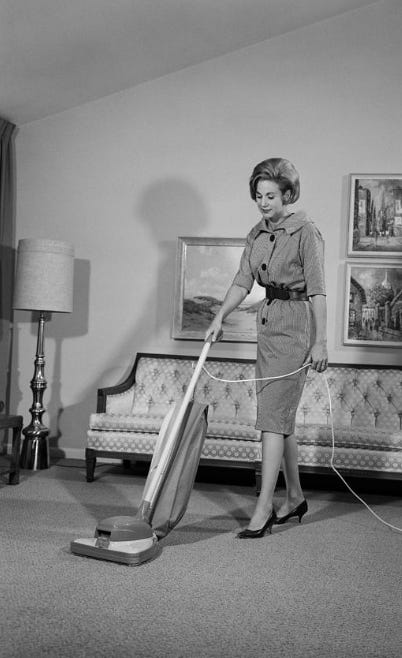
Returning to Lopate’s remarks, Federici argues that based on her views on the pure essence of “femaleness,” Lopate glorifies women’s unpaid labor. Lopate centers “love” and “care” as the reasons that drive women to work at home, but Federici points out the devastating effects that this myth—the woman as a loving caretaker—has had upon women. She continues: “We refuse to elevate a utopia of misery of our mothers and grandmothers and our misery as children! When the state does not pay a wage, it is those who are loved and cared for who must pay with their lives.”16
Indeed, the capitalist class endorses this notion of free work and how it “dis-alienates” the individual from their labor. “The voluntary labor,” Federici contends, “on which the modern state rests is based on just such charitable dispensation of our time.” But imagine, for a moment, if mothers were paid for their love and care. Federici and those in the Wages for Housework movement argue that their attention to children would not be so fraught with resentment and anger, and raising children would be an easier job, as it is, after all, a job.
When one begins to understand that women are wageless workers in the home, one begins to grasp how the capitalist system mediates all social relations, and thus, all of our time and how we function, at any given moment, is for the reproduction of capital. Federici drives this point home (no pun intended) by adding, “The wage (including the lack of it), has allowed capital to obscure the real length of our workday.”17 In a word, leisure time, time at home, and so forth don’t really belong to us. All of our time belongs to capital.
Wages for the Wageless
Social struggle and power for women begins with the wage. Federici then articulates what wage struggle means. For starters, wage struggle has many forms which is not strictly related to wage raises. It can include a reduction in time worked, social services, and, of course, money. These are all gains that “determine how much of our labor is taken from us and how much power we have over our lives.”18 The traditional struggle for the wage has two sides to it, Federici explains. On one side, the side of capital, it is used to control all of us. When they increase raises, they expect improved performance. On the other side, the working class is fighting for more control, power, and less work through the demand for higher wages.
In this way, wages for women who are at home should be high, given the labor they put into the work they do—they provide critical “social services” as Federici asserts. And, most importantly, Federici writes, “to demand wages for housework is to refuse to accept our work as biological destiny.”19 Since we belong to capital at every moment of our living, breathing lives, capital should pay for it all of that time.
To sum up, one does not need to “enter a factory” in order to be part of the working class. Wagless women in their homes, again, who provide crucial social services, are already part of the working class. Federici grants that a wage for women is not going to lead to a revolution, for as long as the wage exists, so will capital. However, she argues that it undermines the capitalist strategy, where the roles are assigned based on the capitalist division of labor. In guaranteeing wages to women in the home, it collapses a part of the division of labor and also disrupts power relations. And by paying wageless women in the home wages that they deserve and are owed, it ultimately leads to more class unity.
Although Federici’s essay was first written in response to Laporte in 1974, the reply was rejected by the editors of Liberation. So, Fedrici’s essay was later published as a pamphlet by Falling Wall Press in 1975.
Silvia Federici, Patriarchy of the Wage: Notes on Marx, Gender, and Feminism (Oakland, California: PM Press, 2021), 8.
Ibid., 8.
Ibid., 9.
Ibid., 9.
Ibid., 10.
Ibid., 10.
Ibid., 11.
Ibid., 11-12.
Ibid., 12.
Ibid., 12.
Ibid., 13.
Ibid., 14.
Ibid., 14.
Ibid., 15.
Ibid., 16.
Ibid., 17.
Ibid., 17.
Ibid., 19.
Shared..
Provocative